Lucky Penny Slot Online: Demo Mode, Bonuses, Paytable and Game Mechanics Explained

Last updated: 14 February 2026 · Reviewed by: the editorial gaming-content team · Reading time: about 14 minutes

«Before you look at any headline bonus or promotional claim, check the fine print, the RTP configuration and the legal boundaries. A useful casino review starts with what can be verified, placing player safety and clear terms ahead of marketing hype.» — Claire Bennett, Senior iGaming Content Editor (editorial persona)

Provider

3 Oaks Gaming

RTP

95.64%

Volatility

High

Min bet

0.10

Max bet

25.00

Max win

x20,000

Lucky Penny Slot Online Demo Mode
Lucky Penny is an online video

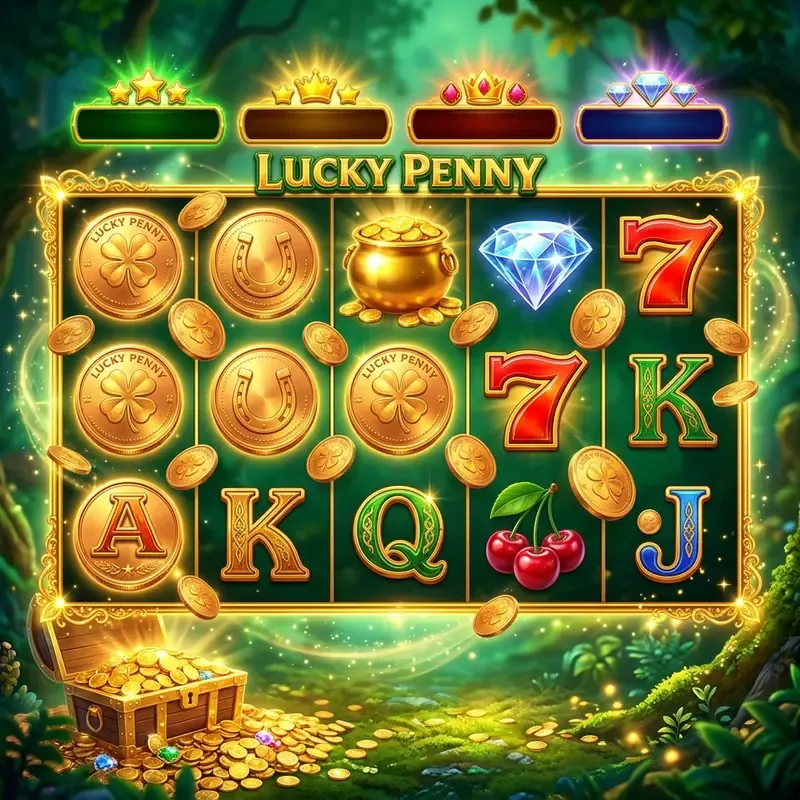
Lucky Penny is an online video slot from 3 Oaks Gaming. It mixes Irish folklore imagery with high-volatility maths, multi-symbol cascades and random multipliers. Launched in late 2024, the title is distributed across international casino platforms and social gaming sites. Depending on the release version and the operator build, you will meet either a pay-anywhere 6×5 layout or a 5×3 Hold and Win configuration.

Disclaimer: This article is general information about slot mechanics, mathematics and regulation. It is not financial, legal or medical advice, and it does not encourage gambling. Gambling involves the risk of financial loss. If gambling is causing you harm, free confidential support is available in Australia through Gambling Help Online (1800 858 858).

Quick summary

Quick summary

  • Developer:3 Oaks Gaming (formerly Booongo), a Malta-based B2B studio operating under MGA oversight.
  • Two distinct builds:a 6×5 pay-anywhere cascade version (8+ matching symbols, multipliers up to 1,000×, cap 20,000×) and a 5×3 version with 25 paylines and four fixed Hold and Win jackpots (cap 12,500×).
  • RTP:95.64% standard, which is a house edge of 4.36%.
  • Volatility:High (6/6). Some review sites call this game «medium volatility». Both the provider specification and independent aggregator data put it at the top of the risk scale.
  • Bonus frequency:free spins roughly 1 in 120 spins; Hold and Win roughly 1 in 300 spins.
  • Demo mode:available on review portals and on social or sweepstakes platforms using virtual credits.
  • Australia:real-money online slots cannot legally be supplied to Australian residents under the Interactive Gambling Act 2001, and the ACMA actively blocks offshore sites.
Why this review matters if you

Why this review matters if you are reading from Australia

Most searches for a slot like this one start with a simple question: can I play it, and what will it cost me? Those two answers are tangled together here. The game itself is licensed B2B software, tested by independent laboratories, and available in free play almost anywhere. Real-money supply to Australian residents is a separate matter, governed by federal law rather than by the studio.

So this review does three things. It separates the two circulating builds, because their paytables and win caps differ. It converts the published RTP into spins, minutes and dollars, so the percentage stops being abstract. And it flags the checks worth making before you deposit anywhere, including withdrawal caps, KYC timing and whether the bonus buy is even switched on for your region. No hype. Just the numbers and the fine print.

What is Lucky Penny and what

What is Lucky Penny and what makes it stand out

Lucky Penny is a modern video slot created by 3 Oaks Gaming (formerly Booongo) that replaces conventional paylines with a pay-anywhere cascade engine, or, in its alternative build, with fixed-line jackpot mechanics. The core 6×5 variant pays whenever eight or more matching symbols appear anywhere across the grid. Winning icons are then removed so new symbols can drop into place within the same paid spin.

The title separates itself from traditional penny slot machines through its high volatility rating, random multiplier symbols reaching up to 1,000×, and a theoretical maximum payout capped at 20,000 times the stake in the cascade build. Older land-based pokies and classic penny slots leaned on fixed line structures and modest top prizes.

Lucky Penny online pairs rapid cascade chains with optional feature-buy functionality instead.

One naming point worth clearing up. The branding references a «penny», yet minimum stake thresholds usually begin between $0.10 and $0.20 per spin, and costs accumulate quickly during long sessions. The historic term «penny slots» described machines accepting a one-cent wager per line or credit. Lucky Penny is a specific game title, not a member of that low-denomination hardware category. This distinction matters in practice: a $0.20 minimum spin repeated at three seconds per round represents a theoretical spend of roughly $240 per hour before any returns are counted.

Version comparison: 6×5 Scatter Pays against 5×3 Hold and Win

The two circulating modifications of Lucky Penny are mathematically and structurally different. Reading one paytable and assuming it applies to the other is the single most common error players make with this title. Confirm which build you have opened before you place a wager. It takes about five seconds.

Table: Lucky Penny, comparison of the two game modifications

ParameterVersion A: 6×5 Scatter Pays / CascadesVersion B: 5×3 Fixed Paylines / Hold and Win
Grid6 reels × 5 rows (30 positions)5 reels × 3 rows (15 positions), 25 fixed lines
Win rule8 or more identical symbols anywhere on the grid3 to 5 identical symbols left to right on an active payline
Core engineCascading (tumbling) reels; winning symbols are removed and replaced within the same paid spinStatic reels with locked bonus symbols and respins
MultipliersPenny Coin multipliers, random values up to 1,000×Expanding wild covering a full reel; no random multiplier grid
Main feature trigger4+ scatters give bonus spins with a progressive total multiplier3+ Gold Pot scatters give 8 free spins; 6+ Penny Bonus symbols trigger Hold and Win
JackpotsNone fixed; value comes from multiplier accumulationFour fixed tiers: Mini, Minor, Major, Grand
Max win20,000× stake12,500× stake
RTP / volatility95.64% / High (6 of 6)95.64% / High

Fact-check note: the frequently quoted 20,000× ceiling applies to the 6×5 cascade build with stacked random multipliers. The 5×3 Hold and Win build is capped substantially lower, at roughly 12,500× the base bet. Some crypto-casino integrations also restrict the maximum bet to as little as $1.25 to $2.20 per spin, which is much narrower than the $0.10 to $25.00 range published for standard fiat releases. Verify both figures inside the in-game information panel.

Lucky Penny demo and free play

Lucky Penny demo is a risk-free demonstration mode. It uses virtual credit balances so players can inspect reel mechanics, symbol payouts and feature triggers without financial exposure. Testing the Lucky Penny free version lets you watch how often cascades occur, and how random multipliers interact with winning combinations, before you consider any real-money play.

Free and simulated slot play is not a fringe habit in this country. Regulator data shows substantial consumer spending inside simulated and social casino products that carry no cash prizes:

«Consumer spending on mobile slots games in Australia in 2021 was approximately US$302 million.» — Australian Communications and Media Authority, Social Casino Snapshot (2023). https://www.acma.gov.au

Treat a demo as a rules

Treat a demo as a rules laboratory, not a predictor of outcomes. A useful test routine looks like this: open the paytable first, confirm which grid you are on, run 100 auto-spins at a fixed stake, note how many spins pass before a feature triggers, then repeat. Demo balances are often seeded at generous default amounts, say 5,000 virtual credits, which distorts the felt experience of a real bankroll. The same volatility feels far less punishing when the money is not yours.

Worth knowing: demo builds do not always mirror commercial builds. Some operators disable the bonus-buy option in free play, and some jurisdictions ban it outright, so a feature visible in the demo may simply be absent once you log in.

Table: Lucky Penny slot specifications and feature summary

ParameterSpecification / ValueEditorial context
Developer3 Oaks Gaming (Booongo)Malta-based B2B studio under MGA oversight; RNG tested by independent laboratories.
ReleaseLate 2024Direct sequel, Lucky Penny 2, followed on 28 August 2025.
Grid layout6×5 (pay-anywhere) or 5×3 (25 lines)Mechanics vary by version; the 6×5 build uses cascading scatter pays.
RTP95.64% (standard)Theoretical return; house edge sits at roughly 4.36%.
VolatilityHigh (6 of 6)Payouts are infrequent and concentrated in bonus features.
Max win20,000× stake (6×5) / 12,500× stake (5×3)Extreme upper payout ceiling; statistically rare.
Bet range$0.10 to $25.00 AUD or currency equivalentMinimum bets exceed historical one-cent single-line levels; some crypto builds cap at $1.25 to $2.20.
Available modesDemo, free play, real moneyAvailability depends on platform licence and local jurisdiction.
Core featuresCascades, multipliers up to 1,000×, free spins, Hold and Win, bonus buyBonus buy may be restricted under specific regimes such as the UKGC.

Fact check and game-mode verification: the availability of Lucky Penny demo, free-play sweeps, Lucky Penny real money wagering and the Lucky Penny bonus buy feature varies by casino operator, platform software and local legal jurisdiction. Verify game rules, actual RTP settings and feature availability directly inside the casino paytable before starting a session.

How to play Lucky Penny online

To play Lucky Penny online, you select a platform, configure a stake level, then choose between virtual practice credits and a real-money balance. Starting a spin sets the reels in motion and triggers win evaluation, based either on symbol clusters or on fixed payline alignments, depending on the active variant.

In an Australian context, the Interactive Gambling Act 2001 prohibits operators from supplying real-money online slot machines to local residents. Federal enforcement here is measurable rather than theoretical, because the regulator publishes quarterly blocking data:

«75 websites offering illegal gambling services were blocked between October and December 2024.» — Australian Communications and Media Authority, Blocking Report, October to December 2024. https://www.acma.gov.au

Free modes deserve the same care. They are behaviourally active, not neutral. Longitudinal research commissioned for the New Zealand Ministry of Health found a directional link between simulated play and later monetary play:

«The number of simulated EGM app sessions in one week reliably predicted increases in real-money EGM gambling the following week.» — Hing et al., New Zealand Ministry of Health, Convergence of Simulated and Monetary Gambling. https://www.health.govt.nz

The same body of work reports that participation in simulated gambling was significantly associated with increased problem-gambling severity in both adolescents and adults. So a free mode works best as an educational tool with a defined purpose and a defined stopping point. Open-ended entertainment is a different thing entirely.

Desktop play and Lucky Penny mobile

Desktop play and Lucky Penny mobile

Lucky Penny mobile is built with responsive HTML5, so the slot runs across desktop browsers, iOS and Android without a dedicated app download. The mobile interface adapts to smaller displays by folding controls into collapsible menus, while keeping identical reel physics, the same RTP model and the same symbol graphics.

Ergonomic differences worth knowing before you play on a handset:

  • Bet selection moves behind a menu. On desktop the coin-value selector is usually persistent. On mobile it is often nested, which makes accidental stake escalation easier and harder to notice.
  • The paytable is paginated. Symbol values, cascade rules and jackpot tiers can be split across three or four swipe screens, so information visible at a glance on desktop needs deliberate scrolling on a phone.
  • Turbo and autoplay sit closer to the spin button. Smaller touch targets raise the chance of enabling fast spin unintentionally, which compresses session time and lifts spend per hour.
  • Portrait mode truncates the 6×5 grid. Landscape orientation is better for the cascade build, since cascades resolve across the full width of the grid.
  • Convenience is the underrated risk factor. Constant access removes the natural friction of travelling to a venue, and Australian researchers identify that friction loss as a contributing factor in escalating participation.

Checklist: launching the game step by step

  1. Verify that accessing online casino content complies with local regulations, and confirm whether the hosting platform holds a verified B2B gaming licence.
  2. Open the Lucky Penny online game lobby and launch Lucky Penny demo mode to inspect rules, paytable and reel mechanics with virtual credits.
  3. Confirm which build you have opened, 6×5 pay-anywhere or 5×3 with 25 lines, because paytables, jackpots and win caps differ between them.
  4. Review the in-game settings menu to confirm the published RTP percentage (standard 95.64%) and check whether volatility controls or feature restrictions apply.
  5. If you move to real-money play where legally permitted, set strict deposit, loss and session-time limits before the first wager.
  6. Adjust bet size conservatively relative to your total bankroll, allowing for at least 100 to 200 spins, and preferably 150 to 200 base bets.
  7. Spin manually or with controlled spin limits, monitor the balance continuously, and stop the moment a pre-set limit is reached.

Symbols, paytable and winning combinations

Winning combinations in Lucky Penny form when a minimum number of identical symbols land anywhere on the grid (6×5 pay-anywhere mode) or match along a payline (5×3 version). Low-pay symbols are stylised card suits. High-value symbols draw on classic Irish luck motifs: four-leaf clovers, horseshoes, smoking pipes and green leprechaun hats.

Paytable and symbol coefficients (5×3 build, 25 lines)

All coefficients below are expressed as a multiple of the total bet. Values come from the 5×3 Hold and Win release. The 6×5 cascade build uses cluster thresholds of 8, 10 and 12+ symbols instead of 3, 4 or 5 on a line, so the coefficients are not interchangeable.

Table: Lucky Penny symbol paytable, 5×3 with 25 fixed paylines

Symbol5 on a line4 on a line3 on a lineSpecial properties
Lucky Penny (Wild)500×100×25×Substitutes for all symbols except Scatter and Bonus; can expand across an entire reel
Gold Pot (Scatter)Awards 8 free spins when 3 or more land anywhere
Golden Horseshoe200×50×12×Premium symbol
Four-Leaf Clover150×40×10×Premium symbol
Ace (A)75×20×Low-pay card symbol
King (K)60×15×Low-pay card symbol
Queen / Jack (Q/J)50×12×Low-pay card symbols
Penny BonusCarries cash values in Hold and Win, and triggers respins from 6 symbols
Two reading notes. First, the headline

Two reading notes. First, the headline 500× wild payout needs five wilds on a single line, one of the rarest outcomes in the model, so the practical value of the wild lies in completing premium combinations rather than in five of a kind. Second, card symbols pay 3× to 5× the total bet for a three of a kind, which is exactly why an advertised hit frequency near one in four spins does not translate into a rising balance.

Our editorial team has audited high-volatility slot frameworks across dozens of provider builds as part of our ongoing iGaming software analysis, mainly to turn opaque bonus-buy multipliers and cascade probabilities into transparent risk metrics. The takeaway from that work is not complicated. Publishing the bankroll a game's variance actually demands, rather than only its top prize, gives readers realistic expectations before registration, and narrows the gap between marketing claims and lived experience.

Wild, scatter and gold symbol

The wild substitutes for standard paying icons, helping complete scatter clusters or payline combinations. Scatter symbols trigger the main free spins feature when three or more (5×3 build) or four or more (6×5 build) land at once. In the Hold and Win variant, the gold symbol, usually drawn as a golden coin or penny, works as a prize carrier that locks onto the reels and starts the respin round.

The psychology attached to these symbols is well documented. Australian behavioural research using eye-tracking has shown that visual attention to near-miss outcomes is trainable rather than fixed:

«Participants trained to categorise near-misses as losses made significantly fewer eye movements toward those outcomes.» — Charles Sturt University, Derived Relations and Attentional Bias for Near-Misses in Gambling. https://www.csu.edu.au

In cluster-based slots like this one, prominent gold symbols and near-miss scatter drops pull the eye and hold engagement. Which is why one point deserves repeating: every spin outcome is decided independently by a certified Random Number Generator. Two scatters on screen when three are required does not mean a third is «due».

The second distortion is the losses-disguised-as-wins effect. Cascade engines intensify it structurally, since a single paid spin can produce several celebratory sequences that together return less than the stake:

«LDW events generate a neurophysiological reward response comparable to genuine wins, producing systematic overestimation of win frequency.» — Vawdon & Livingstone, Addictive Behaviours Reports (2023). https://www.sciencedirect.com/journal/addictive-behaviors-reports

A practical countermeasure: turn the sound off and compare your balance before and after every ten spins, instead of reacting to the animations. The balance is the only honest scoreboard.

Hold and Win mechanics and the four fixed jackpots

The Hold and Win feature in the 5×3 build needs a minimum of six Penny Bonus symbols to land in the base game. Triggering symbols lock in position and the player receives three respins, with the counter resetting to three each time a new coin symbol locks. The round ends when the counter reaches zero, or when all fifteen positions are filled.

Jackpot tiers are awarded by how many coin symbols are locked at the close of the round:

21Bit heading-banner
  • Mini Jackpot:6 to 8 bonus symbols locked.
  • Minor Jackpot:9 to 11 bonus symbols locked.
  • Major Jackpot:12 to 14 bonus symbols locked.
  • Grand Jackpot:all 15 positions filled, with a total round value reaching up to 12,500× the base bet.

Each locked Penny Bonus symbol also carries its own cash value, which is added to the jackpot award. Because the tier boundaries are step-shaped rather than linear, the difference between eight and nine locked coins can be far larger than the difference between six and eight. That structural detail makes the final respins disproportionately consequential, and, let us be honest, disproportionately tense.

Lucky Penny bonus buy and free

Lucky Penny bonus buy and free spins

The Lucky Penny bonus buy feature lets players in supported jurisdictions purchase immediate entry into the free spins round by paying a fixed multiple of the base wager, typically 100× the stake. During free spins, random multipliers landing on the grid accumulate into a progressive total multiplier, applied to cascade payout values inside that feature round.

The arithmetic deserves scrutiny. Paying 100× the stake for a round calibrated to the same 95.64% RTP means you are compressing roughly 120 spins of base-game variance into one event. It does not improve the mathematics. It removes the waiting and sharply increases spend per unit of time. At a $0.20 base stake, one bonus buy costs $20, the equivalent of 100 ordinary spins.

Important: the bonus buy feature, Hold and Win jackpots and high-value multipliers may be disabled or modified depending on operator licensing, jurisdiction rules (UKGC restrictions, for example) or platform settings. Demo versions may also display different feature options than commercial real-money modes. Always review the in-game rules and operator terms to confirm active features before depositing.

Disclaimer: this section describes high-risk product mechanics with direct financial consequences. It is general information only, not advice. Feature-buy mechanics increase turnover per session and are restricted or prohibited in several jurisdictions.

RTP, volatility and Lucky Penny max

RTP, volatility and Lucky Penny max win

The theoretical Return to Player for Lucky Penny is standardly configured at 95.64%, a theoretical house edge of 4.36% across millions of spins. Combine that with a high volatility rating (6/6) and an advertised maximum win cap of 20,000× the stake in the cascade build, and the payout structure becomes clear: most of the value sits in rare, high-multiplier bonus events rather than in frequent base-game wins.

For context, an RTP at or below 94% is generally treated as low, 94% to 96.5% as medium, and above 96.5% as high. At 95.64%, Lucky Penny sits in the middle band. Respectable for a high-volatility release, yet roughly a full percentage point below the best-performing mainstream slots.

Table: Lucky Penny mathematical parameters and statistical breakdown

MetricTechnical valueStatistical interpretation
Return to Player (RTP)95.64%The slot is designed to retain about $4.36 of every $100 wagered over long-term play.
Volatility ratingHigh (6 of 6)Long sequences of non-winning spins are common; bankrolls must absorb significant short-term drawdowns.
Maximum win cap20,000× base bet (6×5) / 12,500× (5×3)The absolute upper limit for a single spin sequence; the probability of reaching it is extremely low.
Base game hit frequencyAbout 27.5% (6×5 mode), vendor-reported, not independently auditedRoughly 1 in 4 spins returns something, though many returns are losses disguised as wins.
Free spins trigger rateAbout 1 in 120 spins, vendor-reported, not independently auditedTriggering naturally without a bonus buy takes substantial session length on average.
Hold and Win trigger rateAbout 1 in 300 spins, vendor-reported, not independently auditedJackpot access is rare; sessions of a few hundred spins may never reach the respin round.
Payout distributionAbout 75% of returns delivered through bonus featuresBase-game play alone returns well below the headline RTP figure.

Transparency note: hit-frequency and trigger-rate figures come from provider and aggregator disclosures rather than published independent laboratory reports. Read them as indicative model averages, not verified audit results.

Bonus hit frequency and a 100

Bonus hit frequency and a $100 session calculation

Percentages are abstract. Spins and minutes are not. The worked example below converts the house edge into expected session length.

Assumptions: $1.00 per spin, $100 starting balance, winnings re-wagered, average spin duration three seconds.

  1. Lucky Penny at 95.64% RTP carries a 4.36% house edge. Expected total spins before the balance is exhausted: $100 ÷ 4.36% is about 2,294 spins, roughly 1.9 to 2 hours of continuous play.
  2. A high-RTP comparison at 96.82% carries a 3.18% edge. The same $100 supports $100 ÷ 3.18%, about 3,145 spins, roughly 2.6 hours.
  3. The gap: an apparent 1.18 percentage-point RTP difference translates into roughly 850 fewer spins and about 37% less playing time for the same deposit. Framed the other way round, the same bankroll empties materially faster.

Now layer volatility on top. At a Hold and Win trigger rate near 1 in 300 spins, a $100 bankroll at $1.00 per spin buys roughly seven or eight expected jackpot-round opportunities across the whole session.

Because triggers are random rather than scheduled, a good share of sessions will contain none at all. Free spins at 1 in 120 spins imply about nineteen expected triggers over 2,294 spins.

The practical conclusion: high volatility needs a bankroll of at least 150 to 200 base bets to sit through the dry stretches without escalating stakes. At $0.20 that means $30 to $40. At $1.00 it means $150 to $200. Choosing a stake that buys fewer than 100 spins is the most reliable way to feel the downside of variance and never see the upside.

How RTP is communicated, and why the wording matters

The wording used to disclose a slot's mathematics measurably changes how players read it. Two large studies quantify the effect:

«Among 6,062 participants, standard return-to-player phrasing increased perceived chances of winning more than house-edge phrasing.» — Newall et al., Never tell me the odds: typical return-to-player information increases gamblers' perceived chances of winning, ScienceDirect. https://www.sciencedirect.com

«Alternative house-edge phrasing reduced perceived chances of winning to a mean of 3.2, versus 3.9 for standard phrasing.» — Newall et al., How does the phrasing of house edge information affect gamblers' perceptions, Nordic Studies on Alcohol and Drugs. https://journals.sagepub.com/home/nad

The second study drew on 3,333 UK-based online gamblers. The implication is straightforward. «95.64% payout» reads as generous. «This game is designed to keep $4.36 of every $100 wagered» reads as a cost. Both describe the same model. Reframing the number as a price rather than a return is probably the cheapest cognitive safeguard available to any player.

Where to play Lucky Penny casino

Where to play Lucky Penny casino: demo or real money

Finding a reputable Lucky Penny casino means evaluating regulatory status, independent RNG certification, transparent bonus terms and reliable withdrawal policies. If you only want to test mechanics, the Lucky Penny free demo appears on informational review portals and on social casino platforms using virtual sweepstakes credits. Note that Lucky Penny ships with a fixed RTP rather than an operator-configurable band, so there is no meaningful «highest RTP casino» for this specific title. The differentiator is operator reliability, not game maths.

The Australian harm context matters when weighing that decision. Pokies-style products are not a marginal contributor to gambling harm here:

«Across 71,103 respondents in national prevalence studies, poker machines account for 51 to 57% of all problem gambling in Australia.» — Australian Gambling Research Centre / National Gambling Trends Study, Australian Institute of Family Studies. https://www.aifs.gov.au/agrc

Because real-money online casino supply is restricted within Australia under the IGA, local residents keep running into offshore brands. ACMA enforcement updates confirm that dozens of illegal offshore portals are blocked each quarter. So anyone evaluating online brands should focus on verified licences, dated auditing certificates from testing laboratories such as eCOGRA or iTech Labs, and visible safer-gambling tools inside the account area.

Payments and withdrawals for Australian users

Payment availability is set by the operator and by your jurisdiction, not by the game. The table below summarises channel types commonly seen on Australian-facing platforms, with indicative processing characteristics. Treat it as a framework for asking better questions, not as an endorsement of any channel.

Table: common deposit and withdrawal channels, indicative characteristics

ChannelTypical deposit speedTypical withdrawal speedPoints to verify
Cryptocurrency (BTC, ETH, USDT)Minutes, network-dependentMinutes to hours after approvalNetwork fees, minimum withdrawal, whether the operator converts to fiat at internal rates
Prepaid vouchers (Neosurf-style)ImmediateDeposit only, so a separate payout channel is requiredWhether an alternate withdrawal method must be pre-verified
Credit and debit cards (Visa, Mastercard)Immediate to 1 day1 to 5 business daysAustralian card issuers may decline gambling-coded transactions
E-walletsImmediateSame day to 3 business daysWhether e-wallet deposits are excluded from bonus eligibility
Bank transfer and PayID-style railsSame day to 2 days2 to 7 business daysWhether the operator supports domestic rails at all
Mobile wallets (Apple Pay, Google Pay)ImmediateRarely supported for payoutsWhich method the payout is routed to instead

Three questions matter more than headline speed. What is the minimum withdrawal amount? Is there a weekly or monthly payout cap that would throttle a large jackpot win? And at what point is KYC verification triggered? Operators that verify identity only at withdrawal, rather than at registration, are the most common source of delayed payouts.

What to check before playing for

What to check before playing for real money

  1. Licensing and ACMA status: confirm the operator holds a valid B2B or B2C licence and does not appear on active regulatory blocklists.
  2. Game version and RTP verification: open the in-game paytable inside the lobby, check that the active RTP matches the standard 95.64% rather than a lowered operator configuration, and confirm whether you are on the 6×5 or 5×3 build.
  3. RNG certification: look for a dated certificate from an independent testing laboratory that names the testing body, not a generic «provably fair» badge on its own.
  4. Bonus wagering terms: read the fine print on promotions, including max cashout caps, playthrough requirements (commonly 30× to 40×), game weighting and expiry limits.
  5. Withdrawal friction and KYC: inspect minimum payout thresholds, verification requirements, weekly caps and processing times for the channels you actually intend to use.
  6. Responsible gambling infrastructure: make sure self-exclusion, loss limits, session timers and deposit controls sit inside account settings and are easy to reach.
  7. Feature availability: confirm whether bonus buy and Hold and Win jackpots are enabled for your account region before planning a session around them.
Who should skip this slot. Not

Who should skip this slot

Not every player suits a 6/6 volatility model. Consider a different title if any of these apply:

  • You prefer frequent, steady returns. Around three-quarters of this game's payout value arrives through features that trigger once every 120 to 300 spins. Low-volatility slots spread value far more evenly.
  • Your bankroll cannot cover 100 or more spins at your chosen stake. Under-capitalised sessions on high-variance games mostly deliver the downside.
  • RTP optimisation is your priority. At 95.64% this sits below the 96.5%+ band. If maximising theoretical return is the goal, higher-RTP titles exist.
  • You are drawn to bonus-buy features. If skipping the wait sounds appealing, feature buys will accelerate spend per hour substantially. That pull is a warning signal, not a strategy.
  • You prefer skill-influenced or table games. Blackjack and video poker variants offer materially lower house edges, with decisions involved.
  • You have caught yourself raising stakes to recover losses. Chasing losses on a high-volatility slot is the fastest route to harm. Pause and use the operator's limit tools.
Game ecosystem Lucky Penny 2 and

Game ecosystem: Lucky Penny 2 and recent 3 Oaks releases

3 Oaks Gaming released the official sequel, Lucky Penny 2, on 28 August 2025. The follow-up keeps the 6×5 grid and the cascading engine, where eight or more matching symbols anywhere on the board form a win, and brings back the Penny Coin multipliers from the original. Two additions set it apart: a Mystery Multiplier feature that resolves at the end of a cascade sequence, and a bonus spins round in which every multiplier from a winning spin is added to a progressive total multiplier. Landing at least four scatter symbols in the base game unlocks that round.

Lucky Penny 2 has since been distributed widely, including integration into the Relax Gaming distribution platform and Microgame's platform in late 2025, alongside other 3 Oaks titles such as Sun of Egypt 5: Hold and Win and Super Hot Teapots.

If the original's gameplay appeals to you, these 3 Oaks releases use comparable mathematical models:

  • 3 Clover Pots Extra, released March 2025. RTP 95.63%, medium-high volatility, max win 5,000×. Irish theme built around a three-pot accumulating respin feature.
  • 3 Aztec Temples, released October 2025. RTP 95.70%, high volatility, max win 2,000×. Aztec treasure theme with cascades and expanding symbols.
  • Coin Lamp, released February 2025. RTP 95.63%, high volatility, max win 2,000×. Built around locking cash coins and respins, so it is structurally closest to the Hold and Win build.
  • Rocket Wins, retro-space theme, RTP 96%, high volatility, max win 1,000×. The highest RTP of the group.
  • 3 African Drums, released January 2025. RTP 95.68%, medium volatility, max win 4,280×. The gentlest variance profile among recent releases.

Notice the pattern. The studio's house RTP sits consistently in the 95.6% to 96.0% band. Play several 3 Oaks titles and you are not diversifying your house edge, only your themes.

How we reviewed this slot. Our

How we reviewed this slot

Our approach to slot reviews is deliberately unglamorous and reproducible:

  1. Build identification first. We open the game information panel before spinning and record grid size, payline structure, published RTP, volatility index and stated max win. Where two builds circulate under one title, as here, we document both separately rather than averaging them.
  2. Paytable extraction. Symbol coefficients are transcribed directly from the in-game paytable at a fixed stake, then normalised to multiples of total bet so they compare cleanly across releases.
  3. Feature observation in demo mode. We run structured demo sessions at a fixed stake with autoplay, recording spins-to-trigger for each feature. We still publish provider-stated trigger rates rather than our own counts, because editorial sample sizes are far too small to estimate events that occur once in 120 or 300 spins.
  4. Cross-referencing. Figures are compared against provider disclosures, aggregator databases and independent laboratory certificates where published. Where sources conflict, for example one review site calling this game medium volatility against a provider specification of 6/6, we flag the discrepancy in the text instead of quietly picking one.
  5. Mathematics translated into time and money. Every RTP figure is converted into expected spins and expected session duration for a stated bankroll, because percentages alone make poor decision-support tools.
  6. Harm-minimisation review. Each review is checked against published behavioural research on LDWs, near-miss processing and RTP disclosure framing, so the psychological mechanics sit alongside the commercial ones.

Lucky Penny FAQ

Responsible gambling. Slots are designed to

Responsible gambling

Slots are designed to retain a percentage of every amount wagered. No stake pattern, session length or feature-buy strategy changes that mathematics. Set deposit, loss and time limits before you begin, keep a written record of deposits and losses, and never wager money you cannot afford to lose entirely.

Warning signs worth acting on: gambling with money set aside for other purposes, increasing stakes to recover losses, hiding gambling from family or friends, and gambling to relieve stress. If any of those sound familiar, use the operator's self-exclusion tools and contact a support service.

Australia: Gambling Help Online, 1800 858 858, available 24/7. International: Gamblers Anonymous and GamCare offer free, confidential support.

General disclaimer: this article is informational and general in nature. It is not financial, legal or medical advice, and it is not an inducement to gamble. Game specifications, RTP settings, feature availability, bet ranges and payment options are configured by individual operators and change without notice. Verify all figures inside the game and the operator terms before wagering. Content is intended for readers aged 18 and over.

Appendix A: editorial revision log

For transparency, earlier phrasing that has been strengthened in this edition is recorded below, alongside the reason for each change.

Earlier phrasingIssueCurrent status
«According to official enforcement reports from the ACMA, federal authorities actively block unlicensed offshore casino domains…»No named report, no figures, no linkReplaced with the ACMA blocking report for October to December 2024 and the specific figure of 75 sites
«Research published by Hing et al. … indicates that practice demos and simulated slot play can habituate users to high-volatility reinforcement patterns»No methodology or measured finding citedReplaced with the study's directional finding on simulated app sessions predicting next-week monetary play
«Behavioural research by Charles Sturt University on gambling attentional bias reveals that near-miss outcomes … can trigger cognitive distortions»No methodology or measured outcomeReplaced with the eye-movement finding from the derived-relations study
«Studies on losses disguised as wins by Vawdon & Livingstone (2023) show that celebratory audio-visual feedback … can lead players to overestimate their overall returns»No mechanism or journal detailReplaced with the neurophysiological reward-response finding, plus journal and link
«Empirical research on return-to-player messaging by Newall et al. … demonstrates that standard RTP phrasing often increases players' perceived chances of winning»No sample sizes or effect dataReplaced with both studies, sample sizes (6,062 and 3,333) and the 3.2 against 3.9 perception means
Single combined description of game mechanicsConflated the 6×5 and 5×3 buildsSplit into a dedicated comparison table, plus separate paytable and jackpot sections
Max win stated as 20,000× without qualificationApplies only to the cascade buildClarified: 20,000× for 6×5, 12,500× for 5×3
Promotional paragraph referencing an editorial review of iGaming softwareRead as an untagged template insertionRewritten as an organic editorial note with a contextual link